The essentials
- 1DIAVAG carries capture profiles for vehicles, trailers, construction machinery and boats; there is no dedicated two-wheeler profile, and a motorcycle is captured in the vehicle profile.
- 2The statutory minimum tread depth of 1.6 millimetres applies to the motorcycle; for mopeds and light motorcycles, § 36 paragraph 3 StVZO considers 1 millimetre sufficient.
- 3For motorcycles the periodic technical inspection interval is 24 months, without the extended first interval familiar from newly registered passenger cars.
- 4Fields that are not applicable belong marked with a reason, not left blank; a blank field later reads like a gap in the capture.
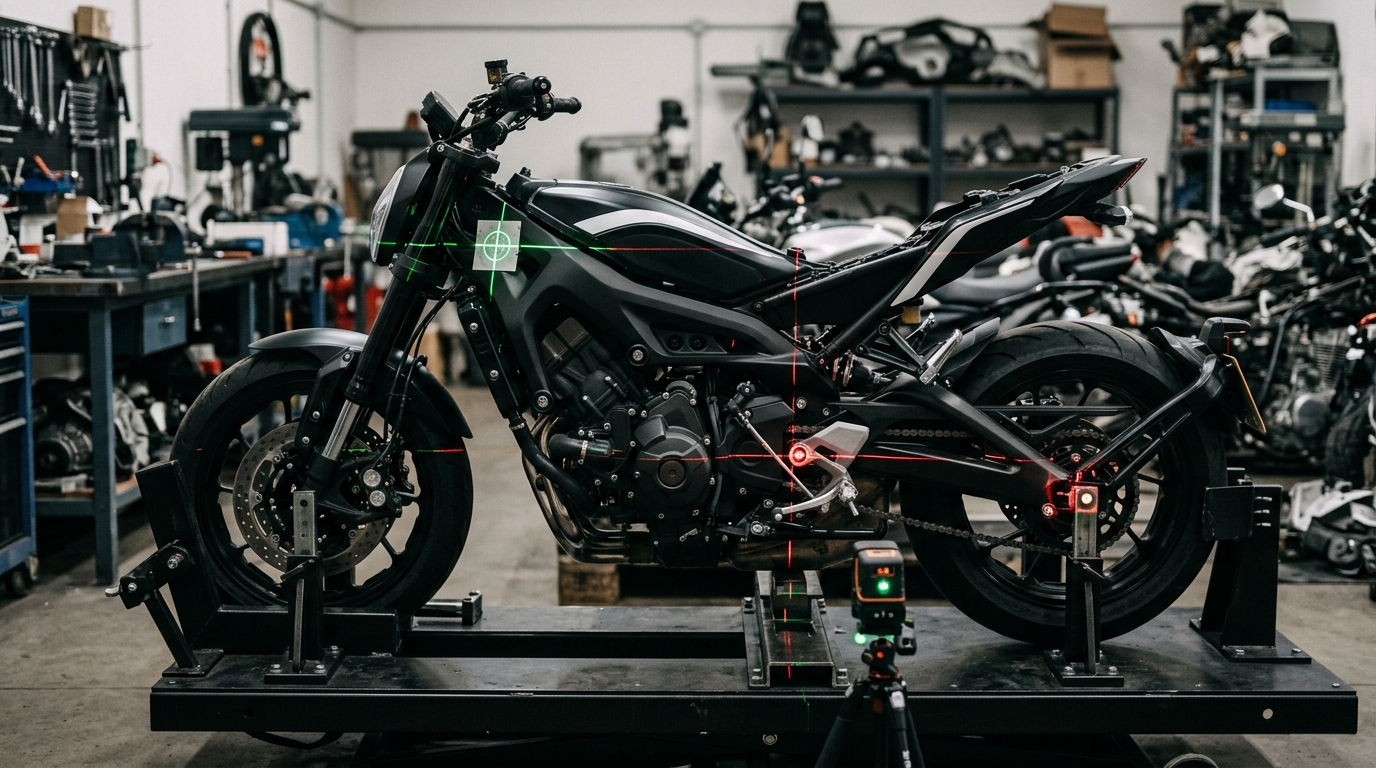
An expert surveying a motorcycle is working in a capture profile designed for a four-wheeled vehicle with bodywork. A large share of the fields transfers unchanged, a smaller share measures something different on a two-wheeler, and some lead nowhere. The distinction belongs in the report, not in the silent discretion of whoever captures the data.
No Dedicated Capture Profile for the Two-Wheeler
Valuing a motorcycle in DIAVAG comes with a precondition that belongs at the start of every engagement: there is no dedicated capture profile for two-wheelers. The platform carries profiles for vehicles, trailers, construction machinery and boats. A motorcycle is captured in the vehicle profile, and that is a deliberate decision by the expert, not an automatic assignment.
This is workable because a substantial share of the fields transfers unchanged. It is professionally sound only if the expert knows which fields change their meaning on a two-wheeler and which are not applicable at all. A profile designed for a four-wheeled vehicle with bodywork asks questions of a motorcycle that either have to be answered differently or lead nowhere.
The defensible approach therefore consists of three steps: adopt what applies unchanged; reinterpret what carries a different meaning on a two-wheeler; and expressly record what is not applicable. The third step is the one most frequently omitted. A field left blank looks months later like a forgotten field, not like a reasoned finding.
What Transfers Unchanged
The identification and master data of the vehicle profile apply to a motorcycle without restriction. The vehicle identification number has seventeen characters and is recorded in the registration certificate; on the machine it is regularly stamped on the steering head and must be verified there, not copied from the paperwork. First registration, mileage, registration plate, number of previous owners and the validity of the periodic technical inspection transfer just as directly as the overall condition grade and the value fields.
With the periodic technical inspection, however, there is a difference that matters both for scheduling and for the valuation. Under Annex VIII to the StVZO the interval for motorcycles is 24 months. The extended first interval familiar from newly registered passenger cars does not exist here: the first inspection falls due 24 months after first registration. An expert who transfers the passenger car logic unexamined dates the due date wrong by a year.
- Read the vehicle identification number at the steering head and reconcile it with the registration certificate
- Capture first registration, mileage, plate and number of previous owners unchanged as in the vehicle profile
- Determine the inspection due date on the 24-month interval for motorcycles, with no extended first interval
- Carry the overall condition grade and value fields unchanged, but derive them from two-wheeler findings
Tyres: Same Fields, Different Limits
The vehicle profile carries two fields for tyres: the lowest measured tread depth and the tyre age from the embossed date code. Both fields apply to a motorcycle, but the stored expectation is not the same for every two-wheeler.
§ 36 paragraph 3 StVZO requires the main tread pattern to show a tread depth of at least 1.6 millimetres around the entire circumference. The main tread pattern is defined there as the broad grooves in the central area of the running surface, which occupies about three quarters of the tread width. For motorised bicycles, mopeds and light motorcycles, however, the same provision considers a tread depth of at least 1 millimetre sufficient. Under § 2 number 10 of the Vehicle Registration Regulations, a light motorcycle is a motorcycle with a rated power of no more than 11 kilowatts and, in the case of a combustion engine, a displacement of more than 50 and no more than 125 cubic centimetres. The 1.6 millimetre note stored in the vehicle profile therefore applies to the full-size motorcycle but not to the 125 class.
There is also a peculiarity in how wear is distributed. A motorcycle tyre wears across the running surface differently from a car tyre: a rider who mostly travels in a straight line wears down the centre and leaves the shoulders standing. The statutory definition of the main tread pattern targets precisely that central area. A single reading per wheel therefore represents the condition inadequately; centre and shoulder belong captured separately, with the least favourable value entered in the field.
For tyre age, the marking under ECE-R30 applies. Since the year 2000 the date code has been four digits and states the week of production and the year of manufacture; before that it was three digits. Age is to be assessed independently of the remaining tread depth and documented separately.
Fields That Change Meaning on a Two-Wheeler
Three fields of the vehicle profile are applicable to a motorcycle but measure something different there than on a passenger car. If they are filled in unchanged, the result is a finding that looks formally complete and misleads professionally.
Paint thickness is the clearest example. It is measured magnetically-inductively or by eddy current and presupposes a metallic substrate. On a motorcycle that is essentially the tank and, depending on the design, the tail section. Plastic fairings yield no comparable reading, and a powder-coated frame cannot meaningfully be compared with the expectation values of body paintwork. Measurement is therefore taken where it is methodologically sound, and the report names which components were measured and which were not.
Corrosion shifts from sheet metal to frame tubes, weld seams, the exhaust system and spokes. On a motorcycle the frame is a load-bearing component and at the same time visible; a rusted-through frame tube is a different finding from surface rust on an exhaust clamp, and the profile's distinction between no corrosion, surface rust and rusted through must therefore be made per location.
The field for visible accident traces becomes a drop inspection on a two-wheeler. What is meaningful here are bar ends, footrests, brake and clutch levers, tank edges, engine covers and mirror mounts; bent fork tubes and a front wheel out of alignment point to a frontal impact. These features belong named individually and not summarised in a yes-no field.
Fields That Do Not Transfer
Four fields of the vehicle profile cannot meaningfully be completed on a motorcycle. They belong not left blank but annotated with a reason, so that the report does not later read like an incomplete capture.
| Field in the vehicle profile | Situation on the two-wheeler | Recommended handling |
|---|---|---|
| Panel gaps | There is no bodywork with attached panels whose joints could be measured | Mark as not applicable; assess alignment instead via frame and fork alignment |
| Interior condition | No interior present | Mark as not applicable; carry seat, grips and controls as separate findings |
| OBD2 fault memory | A standardised diagnostic interface in the passenger car sense is not a given | Record as not readable with the reason stated, unless a manufacturer-specific access is used |
| Number of keys | Formally transferable, but without the significance it carries on a passenger car | Capture, but do not treat as a condition indicator in the report |
The point on on-board diagnostics deserves a closer classification, because it is frequently over-generalised. Article 21 of Regulation (EU) No 168/2013 on the approval and market surveillance of two- and three-wheel vehicles and quadricycles governs the requirements for on-board diagnostic systems for vehicles of category L. The first OBD stage essentially captures electrical faults such as short circuit, cable break or sensor failure; the second stage additionally requires functional monitoring. The dates of application follow from Annex IV to the regulation. In practice this means: an older motorcycle may have no diagnostic interface at all, a newer one an interface whose access and scope differ from passenger car practice. The blanket entry no entries is incorrect in both cases.
Two-Wheeler Findings With No Field of Their Own
Some of the value-determining features of a motorcycle have no counterpart in the vehicle profile. They therefore do not drop away but are carried as added fields or in the body of the findings. The profile permits this addition; what matters is that every finding carries its origin, that is, whether it rests on measurement, visual inspection or a client statement.
- Drivetrain: wear on chain, front sprocket and rear sprocket, chain slack and alignment, and with shaft drive the tightness of the final drive
- Front suspension: fork tubes for scoring and corrosion, seals for oil leakage, steering head bearing for play and notchiness
- Brakes: measure brake discs against the minimum thickness stated on the disc, assess pads and brake fluid separately
- Wheels: with spoked wheels, spoke tension and rim runout; with cast wheels, cracks in the area of the spoke transitions
- Engine and exhaust: tightness, originality of the system and registered modifications checked against the registration certificate
With registered modifications the reconciliation against the vehicle paperwork is particularly rewarding. A retrofitted exhaust or a handlebar conversion may or may not be registered, and the difference is material to the valuation. The expert establishes what is fitted and what the papers say; assessing that difference is a professional appraisal and belongs marked as such.
Documenting What the Profile Does Not Ask
A motorcycle report produced in the vehicle profile becomes defensible when the report names the deviation itself. This includes a short passage recording that capture took place in the vehicle profile, which fields were treated as not applicable and which two-wheeler findings were added. That is not a weakness of the report but the disclosure of the method, and it removes the basis for a later query.
The overall condition grade is derived here too, not awarded. It must follow from the individual findings captured, and the individual findings must include the two-wheeler items. A grade resting on a capture in which chain, fork and brake discs do not appear describes a vehicle that was not surveyed. The principle is the same as for any other asset: no value without a source.
DIAVAG is a software platform for experts. It employs no experts of its own and produces no reports; it provides capture, the draft and delivery under the expert's own brand. Which asset class is right for an engagement, which fields are applicable and how the findings are to be appraised is decided by the expert who signs. For the requirements of a court-proof report, the vehicle segment changes nothing.
Frequently asked questions
- Does DIAVAG have a dedicated capture profile for motorcycles?
- No. The platform carries capture profiles for vehicles, trailers, construction machinery and boats. A motorcycle is captured in the vehicle profile. That is workable, but it requires the expert to know the non-transferable fields and to mark them as such in the report.
- What minimum tread depth applies to motorcycle tyres?
- Under § 36 paragraph 3 StVZO the main tread pattern must show at least 1.6 millimetres around the entire circumference. For motorised bicycles, mopeds and light motorcycles, 1 millimetre is sufficient. Under § 2 number 10 FZV a light motorcycle is limited to 11 kilowatts of rated power and 125 cubic centimetres of displacement.
- How often must a motorcycle undergo a periodic technical inspection?
- Every 24 months under Annex VIII to the StVZO. Unlike a newly registered passenger car there is no extended interval for the first inspection; it falls due two years after first registration.
- Can an OBD2 fault memory be read on a motorcycle?
- Not consistently. Article 21 of Regulation (EU) No 168/2013 governs on-board diagnostics for vehicles of category L in two stages, whose dates of application follow from Annex IV. Older machines may have no interface at all, newer ones an interface whose access differs from passenger car practice. The field belongs recorded as not readable with the reason stated.
- Is paint thickness meaningful on a motorcycle?
- Only on metallic components, essentially the tank and, depending on the design, the tail section. Plastic fairings yield no comparable reading, and a powder-coated frame cannot meaningfully be compared with the expectation values of body paintwork. The report should name which components were measured.
We'll get in touch with you personally.
No newsletter, no mailing list: sign up if you'd like to learn more about the platform — we'll reach out to you directly.